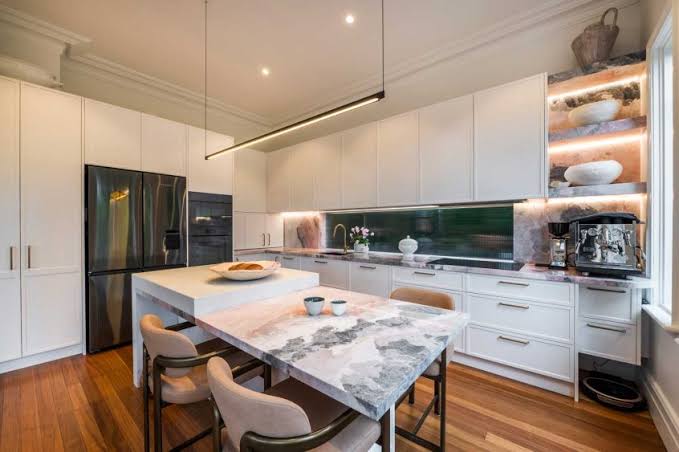
A kitchen should make everyday cooking feel natural rather than complicated. It needs enough space for preparing meals, convenient places to store essential items, and surfaces that can handle regular use. While appearance is important, the most successful kitchen designs begin with practical decisions that support the household’s daily routine.
The first thing to consider is how much room is available. A compact kitchen may need a straightforward layout with carefully positioned cabinets, while a larger room can accommodate additional preparation areas or a dining space. Measuring walls, doorways, windows, and appliance spaces before purchasing anything can prevent installation problems. It also helps homeowners understand which design ideas are realistic.
Worktop placement deserves particular attention. Preparing meals often involves several activities, including washing vegetables, chopping ingredients, mixing food, and arranging cookware. Having a clear surface close to the sink and cooking area makes these tasks easier. If the available countertop is limited, a pull-out work surface or movable kitchen trolley can provide extra room without requiring major structural changes.
Cabinets should offer convenient access to both everyday essentials and less frequently used equipment. Deep drawers are useful for storing pots, pans, and larger utensils, while smaller compartments can keep cutlery and kitchen tools organized. Corner storage systems can make awkward spaces more accessible. Adjustable shelves are also valuable because they allow cupboard interiors to change as storage needs develop.
Choosing durable surfaces can reduce long-term maintenance. Countertops are exposed to heat, moisture, food stains, and frequent cleaning, so their material should suit the level of use. Quartz, granite, laminate, and other engineered surfaces offer different appearances and care requirements. It is sensible to review product specifications and understand how each option should be cleaned before making a final decision.
Kitchen flooring must also withstand regular activity. Porcelain and ceramic tiles are common choices because they are available in numerous colours and finishes. Vinyl flooring can provide a practical alternative, particularly where a softer surface is preferred. Whatever material is selected, it should be suitable for areas where occasional spills are likely. Proper installation and suitable cleaning products will help preserve its condition.
Lighting makes a significant difference to both safety and atmosphere. A central ceiling fixture can illuminate the room, but it may not provide enough light directly above preparation areas. Under-cabinet lighting helps brighten countertops, while pendant fixtures can add visual interest above an island or breakfast bar. Using separate lighting arrangements allows the kitchen to feel bright during cooking and more relaxed during meals.
Appliance placement should make everyday tasks straightforward. The refrigerator needs enough surrounding space for its doors to open properly, while the oven should have a nearby surface where hot dishes can be placed safely. A dishwasher positioned close to the sink can make cleaning up easier. Before buying appliances, homeowners should check their dimensions, ventilation needs, electrical connections, and water supply requirements.
A good kitchen also needs effective ventilation. Cooking produces heat, steam, and odors that can make the room uncomfortable when they are not properly managed. An extractor hood can help remove airborne grease and moisture, while suitable windows provide additional airflow when conditions allow. Filters should be cleaned regularly to maintain the equipment’s performance.
Keeping the kitchen organized requires simple habits rather than complicated systems. Food supplies should be grouped together, frequently used utensils should remain accessible, and unused equipment should not occupy valuable work surfaces. Checking cupboards occasionally can reveal items that are no longer needed and create room for essentials. Cleaning as you cook also makes the final kitchen cleanup much easier.
Decorative details can bring warmth and individuality to the finished space. Natural wood accessories, simple wall art, indoor plants, and comfortable seating can make the kitchen feel more welcoming. These additions should complement the design without interfering with movement or reducing preparation space.
A comfortable and efficient kitchen comes from understanding how the room will be used and choosing features accordingly. Careful measurements, durable materials, accessible storage, suitable lighting, and reliable appliances can make a lasting difference. With practical planning, homeowners can create a kitchen that looks attractive while supporting the demands of everyday life.
Leave a Reply